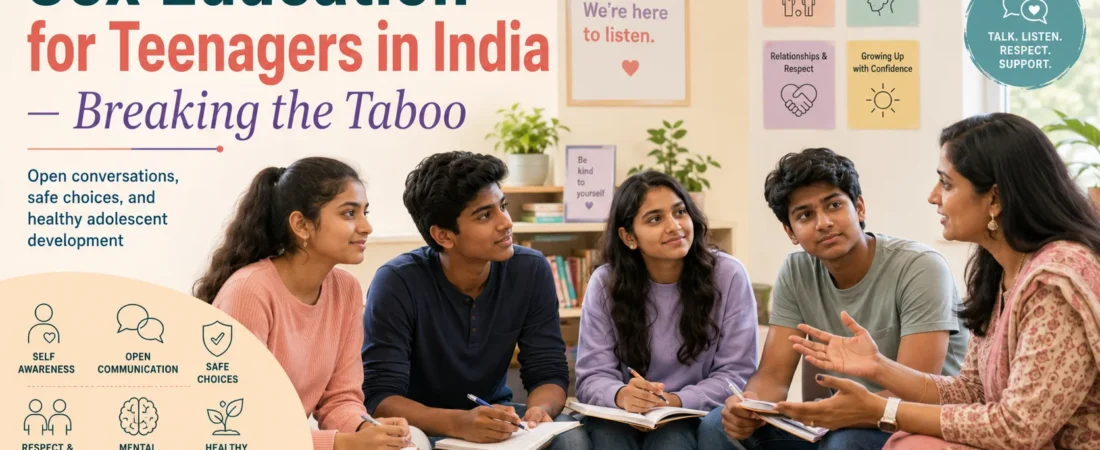
Sex education for teenagers is one of the most essential yet widely ignored conversations in Indian households — and it’s time we change that.
May is dedicated to Mental Health Awareness Month, a time to bring attention to and combat the negative stereotypes surrounding mental health problems. This article explores why open conversations about sex education are critical for the healthy development of young individuals in India.
Why Sex Education Remains a Taboo in India
Sex is a word that often raises eyebrows and is considered taboo in many Indian households. Being a teenager in India can be a challenging experience when it comes to navigating this sensitive topic — often without proper guidance or support. Primary research for most teens involves internet searches and jokes shared among equally uninformed peers.
The cultural traditions of India have historically included discussions of various forms of sexuality and desires. However, the concept of sexuality became undesirable in post-colonial society. Even today, sex education remains taboo in both urban and rural India.
Why Sex Education Matters More Than Ever
It is quite surprising that even in today’s advanced world, youngsters are rarely taught about safe sex and sexual wellbeing. Sex education is specifically designed to equip young individuals with the knowledge and abilities necessary to make informed choices regarding sex and relationships throughout their lifetime.
Is sex education effective? Indeed, it works in several remarkable ways! It equips young individuals to maintain optimal sexual health, cultivate healthy relationships, make informed choices, think critically, support vulnerable peers, and embrace self-love and acceptance.
What Parents Get Wrong About Sex Education
As a life coach, I frequently encounter worried parents who avoid discussing sex with their teens. They fear that starting the conversation may ignite curiosity and mislead them. However, ignoring the topic only pushes teenagers toward unreliable internet sources — which is far more harmful.
What Does Sex Education Actually Cover?
Sex education is a structured program that provides knowledge and guidance to young individuals without causing confusion. It typically covers:
- Adolescence and physiological changes
- Reproductive and sexual well-being
- Sexual orientation and gender identity
- Contraceptives and practising safe sex
- Addressing and preventing sexual violence
The goal is to promote a greater understanding of one’s body and different gender identities. Adolescence can be challenging due to raging hormones and a more complex outlook on life. Sex education helps adolescents overcome these challenges by teaching them respect — for their own bodies and for others.
Keeping sexually explicit discussions behind closed doors may impede development. All children deserve basic sex education in their formative years. It can start with a simple conversation. If you feel unprepared, consulting a doctor or specialist can be a helpful first step.