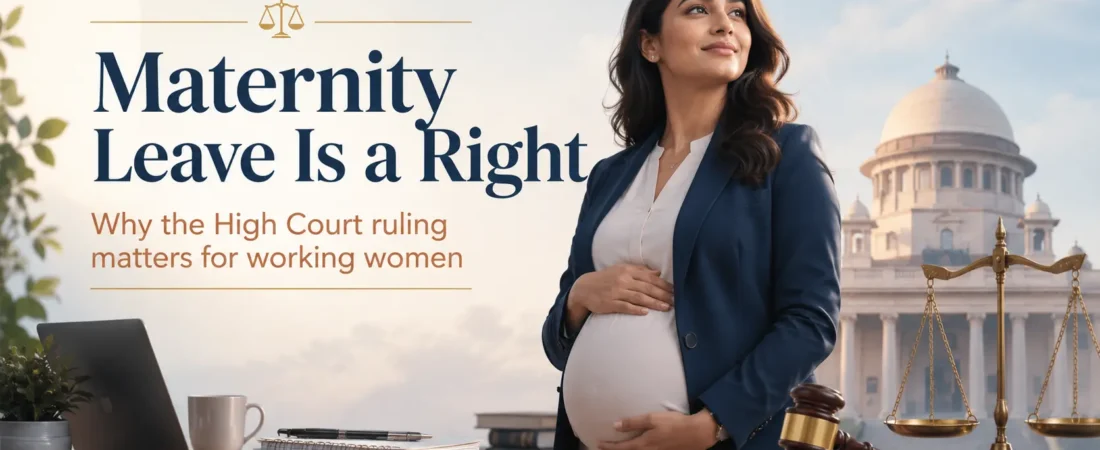
Every now and then, a headline pops up that makes you pause, blink twice, and wonder if some institutions are running on auto‑pilot with the “logic” setting permanently switched off. The recent High Court ruling on maternity leave is one such masterpiece — a reminder that even in 2026, we still need judges to explain the ABCs of human biology to workplaces.
A woman has twins in her first pregnancy. Years later, she has another baby. She applies for maternity leave. And her institution — an educational one, mind you — responds with the enthusiasm of a strict cashier guarding a discount counter: “Sorry, madam. You already used your quota. Twins count as two. No more leave.”
If this wasn’t so tragic, it would be hilarious.
Because apparently, in 2026, we still need a High Court to explain that a woman’s body does not magically become pain‑free after producing two children. Childbirth is not a loyalty program where the first delivery is “premium pain,” the second is “medium pain,” and by the third, the uterus politely says, “Don’t worry, I’ve got this.”
No. Every pregnancy is a full‑blown physical, emotional, hormonal roller coaster. Whether it’s the first child or the fifth, the body goes through the same storm — the swelling, sleeplessness, recovery, mental load.
The bitter truth is simple: many workplaces still treat maternity as an inconvenience, not a right. And when they can’t deny it outright, they hide behind technicalities, hoping no one notices the cruelty wrapped in bureaucracy.
Thankfully, the High Court did.
In a refreshingly sensible ruling, the court reminded everyone that laws are meant to be interpreted with humanity, not with the emotional intelligence of a stone. In other words: Stop weaponizing rules to punish women for reproducing.
But the larger question remains — why does a woman have to run to court to claim something as basic as maternity leave? Why does society need legal reminders to behave decently? Why do workplaces still act like pregnancy is a personal hobby instead of a biological reality?
Maybe because we’re still stuck in a mindset where women are expected to be superhuman — deliver babies, raise families, work full‑time, smile through exhaustion, and never ask for anything that costs the system money.
This ruling is a win, yes. But it’s also a mirror – showing how far we still have to go before maternity is treated with dignity instead of suspicion.
To the woman who fought this battle — and to every woman who has had to justify her pregnancy to her employer — this judgment is for you. And to institutions still clutching their rulebooks like shields, the High Court has spoken: Try humanity. It’s cheaper than litigation.