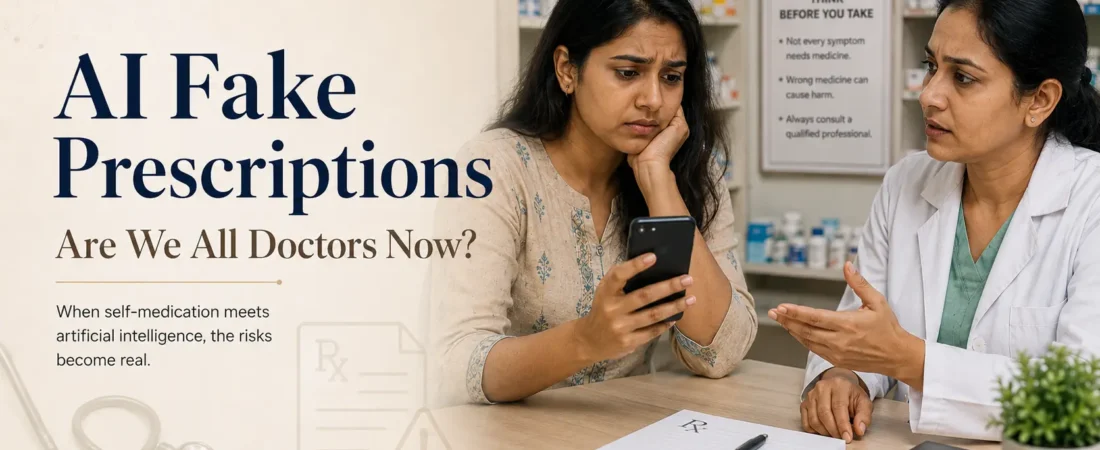
The classic neighbourhood uncle and aunty — the ones who have an opinion on every medicine ever invented — are celebrating. With AI churning out prescriptions on demand, their lifelong dream of becoming “doctor without a degree” finally feels officially recognised. The recent exposé on how easily people are generating fake prescriptions isn’t just about technology being misused. It’s about something far more dangerous: our national obsession with self-medication and our Olympic-level confidence in diagnosing ourselves.
AI Fake Prescriptions: The Real Problem Behind the Joke
“AI, give me a prescription” is the new “Google, do I have cancer?” People are now using AI to generate prescriptions faster than they can make Maggi. Antibiotics? Done. Painkillers? Done. Psychotropic meds? Why not? Some of these prescriptions are from hospitals that don’t even exist. But if the font looks official, the medicine must work — or so people think.
But let’s pause the comedy for a second. Behind the jokes lies a very real, very serious issue.
Why AI Fake Prescriptions and Self-Medication Are Dangerous
- Self-medication is not harmless. Taking antibiotics “just in case” is how we create drug-resistant superbugs — the kind that makes real doctors cry.
- Psychotropic drugs are not candy. Anxiety meds, sleep meds, opioid painkillers — these require medical supervision for a reason. Taking them without guidance is like playing chess blindfolded!
- Wrong medication = real harm. Allergic reactions, organ damage, dependency, masking serious illnesses — these are not punchlines. They are consequences.
- Fake prescriptions erode trust. When pharmacies can’t distinguish between real and AI-generated documents, the entire healthcare system becomes vulnerable.
The article doesn’t just expose how easy it is to generate fake prescriptions. It exposes how eager people are to avoid real medical care. Why visit a doctor when you can ask AI? Why pay for a consultation when you can pay with confidence? This behaviour isn’t funny anymore — it’s risky, irresponsible, and potentially life-threatening.
What AI Can and Cannot Do in Healthcare
Technology is powerful. However, so is common sense. AI can assist, inform, and support. But it cannot replace a trained medical professional. It cannot examine you, diagnose you, or understand your medical history. Furthermore, it definitely cannot protect you from the consequences of taking the wrong pill.
This incident should remind us of three important things:
- Healthcare is not DIY.
- Prescriptions are not templates.
- Medicines are not snacks.
The Bottom Line: Confidence Is Great, But Competence Saves Lives
So yes, laugh at the absurdity. But also learn from it. Because the next time someone proudly waves an AI-generated prescription, remember: Confidence is great. But competence saves lives. For that, we still need real doctors — not digital ones, not imaginary ones, and definitely not the aunty who diagnoses everything as “gas.”