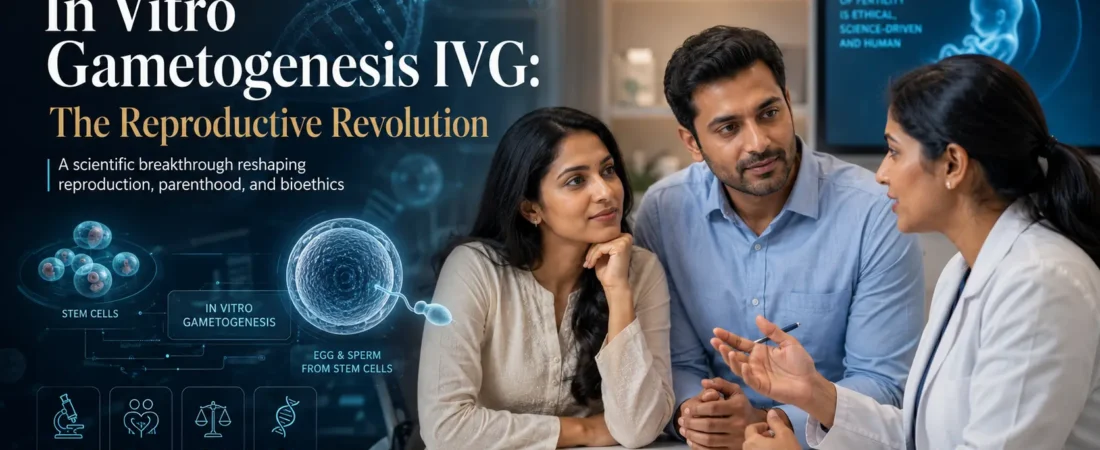
In vitro gametogenesis (IVG) isn’t just another scientific milestone — it’s the kind of breakthrough that forces society to rewrite its rulebook. The ability to create eggs or sperm from stem cells is no longer a distant concept. It’s a rapidly advancing reality. It’s about to challenge everything we think we know about reproduction, parenthood, and bioethics.
IVG has the potential to do what IVF did in the 1970s — but on a far more seismic scale. We’re talking about a future where same‑sex couples, individuals with infertility, and even those who never produced gametes naturally could have genetically related children. This isn’t incremental progress. This is a paradigm shift.
Why IVG Is a Revolutionary Force in Reproductive Science
At its core, IVG promises unprecedented reproductive freedom. Scientists are exploring ways to turn ordinary skin or blood cells into functional gametes. If successful, this could transform reproductive medicine completely:
- Restore fertility for millions
- Enable biological parenthood for same‑sex couples
- Allow creation of multiple embryos for genetic screening
- Transform reproductive medicine into a precision‑driven field
Pair IVG with rapid advances in genomic analysis, and we’re looking at a future where embryo selection becomes data‑rich, efficient, and deeply personalized. However, our ethical frameworks and legal systems are nowhere close to catching up.
The Legal Vacuum Around IVG Is Alarming
Most countries don’t have laws that even imagine IVG. Current regulations were built for IVF, surrogacy, and donor gametes — not lab‑generated eggs and sperm. As a result, significant gaps exist:
- Clinical use of IVG is prohibited or unregulated in many regions
- Parentage laws don’t account for lab‑derived gametes
- Consent frameworks fail to address the possibility of creating gametes from discarded or stolen cells
The science is sprinting. The law, however, is sleepwalking.
The Ethical Questions IVG Forces Us to Confront
IVG forces society to confront questions that cut deeper than technology. These aren’t theoretical dilemmas — they’re active debates among global bioethics councils:
- Genetic consent: If gametes can be made from any cell, how do we prevent misuse?
- Designer‑baby concerns: Will embryo selection become a gateway to genetic optimization?
- Embryo surplus: What happens when labs can generate embryos at scale?
- Equity: Will IVG widen the gap between those who can afford advanced reproduction and those who can’t?
- Redefining parenthood: When biology becomes programmable, what does “biological parent” even mean?
The Bottom Line: Are We Ready for IVG?
IVG is coming — and fast. It will democratize parenthood, challenge outdated laws, and force society to rethink ethics at a foundational level. The question isn’t whether IVG will reshape the future of reproduction. Rather, it’s whether we will shape that future responsibly, or let it unfold without guardrails.