The other day, during a casual chat with an acquaintance, I encountered a question that truly made me pause. Knowing I work in the fertility field, he curiously remarked, “Isn’t IVF being promoted heavily just to generate revenue? It feels like every other woman is opting for it these days. And isn’t encouraging egg and sperm freezing pushing the idea of late parenthood? Is late parenthood even a good choice? IVF is expensive, yet it seems to be suggested for the slightest issues.”
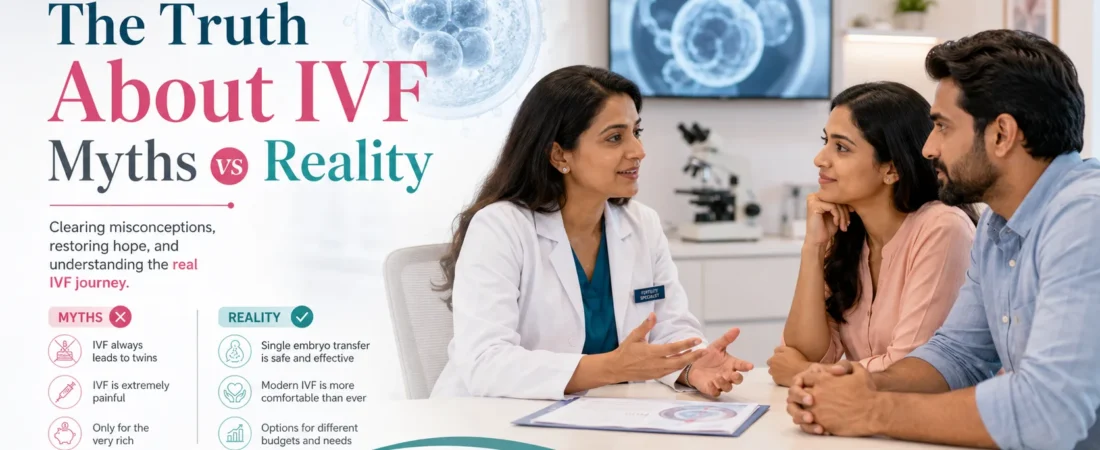
Hearing this, I realized how many misconceptions still persist about IVF. It’s disheartening to see myths, often fueled by social media and unverified sources, overshadow the truth. While IVF has brought hope to countless families, it’s critical to dispel the notion that it’s a “one-size-fits-all” solution or a mere profit-driven venture. Educating society on the science and ethics of fertility treatments is more essential now than ever.
Let’s talk about IVF—a topic that often sparks curiosity, debates, and unfortunately, misconceptions. Modern lifestyle changes, including stress from demanding work environments, strained relationships, unhealthy eating habits, smoking, and alcohol consumption, have significantly affected fertility in today’s generation. While egg and sperm freezing empower individuals with choices, IVF addresses specific medical issues like low fertility rates, poor sperm quality, or blocked fallopian tubes. It’s a highly specialized procedure providing hope to couples who face genuine biological hurdles, rather than a generalized solution.
What the Truth About IVF Really Looks Like
As a consultant with over a decade of experience in fertility care, I’ve witnessed families whose dreams of parenthood came to life through IVF, their faces lighting up with indescribable joy. But I’ve also seen hopes falter, leaving families heartbroken and searching for strength to carry on. IVF is never an easy journey—ethically, no doctor would recommend it to a perfectly healthy couple. The procedure involves rigorous hormonal and medical treatments for women, an emotional and physical rollercoaster I’ve experienced myself. It demands resilience, unshakable determination, and unwavering hope, the kind that burns brightly even in the darkest moments. Despite failed treatments, I held onto that hope, driven by the profound desire to embrace motherhood. To those willing to give it their all, IVF is an opportunity to turn dreams into reality—a journey of courage and love.
That said, IVF isn’t the profit-driven enterprise it’s often misunderstood to be. It’s a life-changing solution for couples facing genuine medical barriers to conception. It’s not for everyone, but for those willing to give it their all, it can be an incredible pathway to parenthood. No matter the outcome, hope and perseverance are key. That’s the heart of the IVF journey